VoIP Security
Understanding the challenges of securing IP telephony infrastructure
VoIP and its challenges
IP telephony relies on open protocols (SIP, RTP, SRTP) that traverse enterprise and Internet IP networks. This convergence brings great flexibility but exposes voice communications to the same threats as traditional IT systems: interception, fraud, denial of service and identity spoofing.
Risks and threats
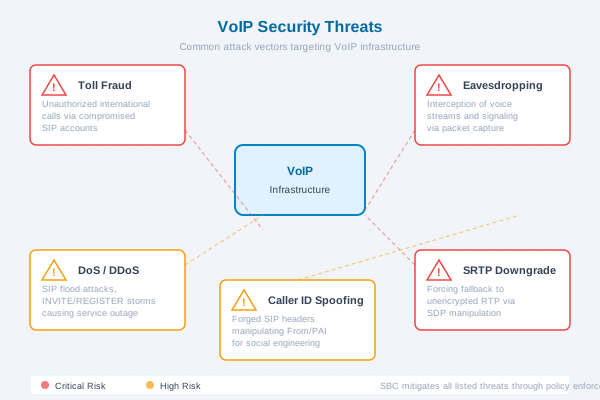
Toll fraud
Unauthorized use of telephony resources, international call hijacking, overbilling. Unprotected VoIP systems are prime targets for large-scale fraud.
Eavesdropping
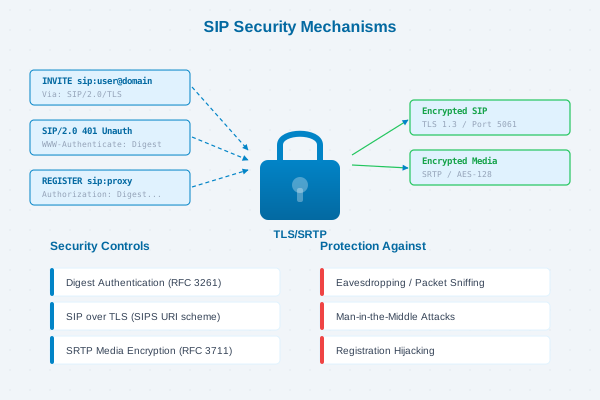
Unencrypted SIP and RTP flows can be captured on the network. Without TLS for signaling and SRTP for media, any conversation can be intercepted.
Denial of service
SIP servers exposed to the Internet are vulnerable to DoS and DDoS attacks. An abnormal volume of INVITE, REGISTER or OPTIONS requests can saturate the infrastructure and disrupt phone service.
Identity spoofing
The SIP protocol does not natively provide strong authentication. Without controls, an attacker can forge caller identities and compromise trust in communications.
Security pillars
TLS/SRTP encryption
SIP signaling encryption with TLS and media flow encryption with SRTP. End-to-end protection against interception and modification of communications.
Access control
Systematic authentication of devices and users. Access control lists, rate limiting, source IP filtering and session validation.
Topology hiding
Concealment of the internal voice network structure. The SBC rewrites SIP headers and SDP information to reveal nothing about the internal infrastructure.
Network segmentation
Isolation of voice flows in dedicated VLANs, physical or logical separation between carrier, DMZ and internal LAN zones. Each zone has its own security rules.
The Bill-IT approach
We audit your existing VoIP infrastructure, identify vulnerabilities and design a security architecture tailored to your constraints. Our approach covers the entire chain: from SIP signaling to media transport, from carrier interconnection to equipment administration.