
VoIP Migrations
Telecom infrastructure transformation with controlled risk
Migration challenges
Migrating from a traditional telephony infrastructure to a modernized VoIP architecture is a complex project that affects the entire organization. It involves changes in protocols, network topology, providers and often the operating model. Risk management and service continuity are essential.
Technical challenges
PBX to SIP migration
Replacing traditional PBX systems (TDM) with SIP solutions. Managing temporary coexistence between both environments, progressive migration of endpoints and trunks.
Multi-carrier integration
Simultaneous interconnection with multiple SIP carriers for redundancy, cost optimization and geographic coverage. Each carrier has its own signaling specifics.
Interoperability
Telephony equipment from different vendors implements the SIP protocol with variations. The SBC normalizes these differences and ensures compatibility between all systems.
Service continuity
Telephony is a critical service. Migration must be planned to minimize disruptions, with rollback mechanisms and validations at each stage.
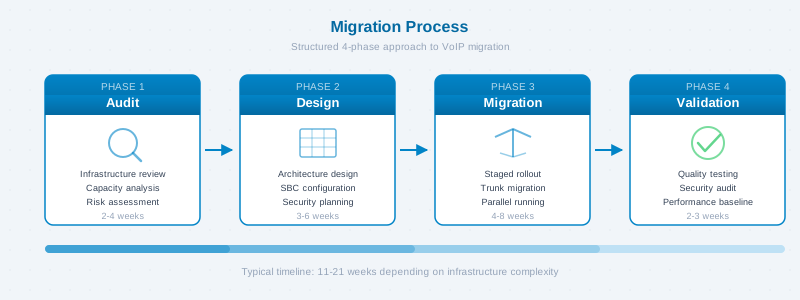
Our approach
Audit
Complete inventory of existing infrastructure: equipment, trunks, numbering plan, communication flows, call volumes and operational constraints.
Design
Detailed target architecture: network topology, SBC selection, sizing, addressing plan, routing and security policies, high availability.
Migration
Progressive phased deployment: SBC installation, SIP trunk configuration, migration by site or user group, validation at each step.
Validation
End-to-end testing: voice quality, failover scenarios, performance under load, security and compliance. Knowledge transfer and complete documentation.
Migration scenarios
SIP Trunking
Replacing ISDN/PRI links with SIP trunks. Cost reduction, bandwidth flexibility and integration with unified communications platforms.
Multi-site centralization
Consolidating telephony from multiple sites to a centralized platform. Simplified administration, standardized configurations and economies of scale.
Cloud migration
Transition to SaaS communication solutions (UCaaS). The SBC ensures secure interconnection between the enterprise network and the cloud platform.